CARP LAB
Cardiac Arrhythmia Research Program
Simulation of Arrhythmia in The Ventricles
Activation wavefronts of a reentrant tachycardia in the ventricles.
.gif)
Simulation of a Normal Heart Beat
Sinus Rhythm
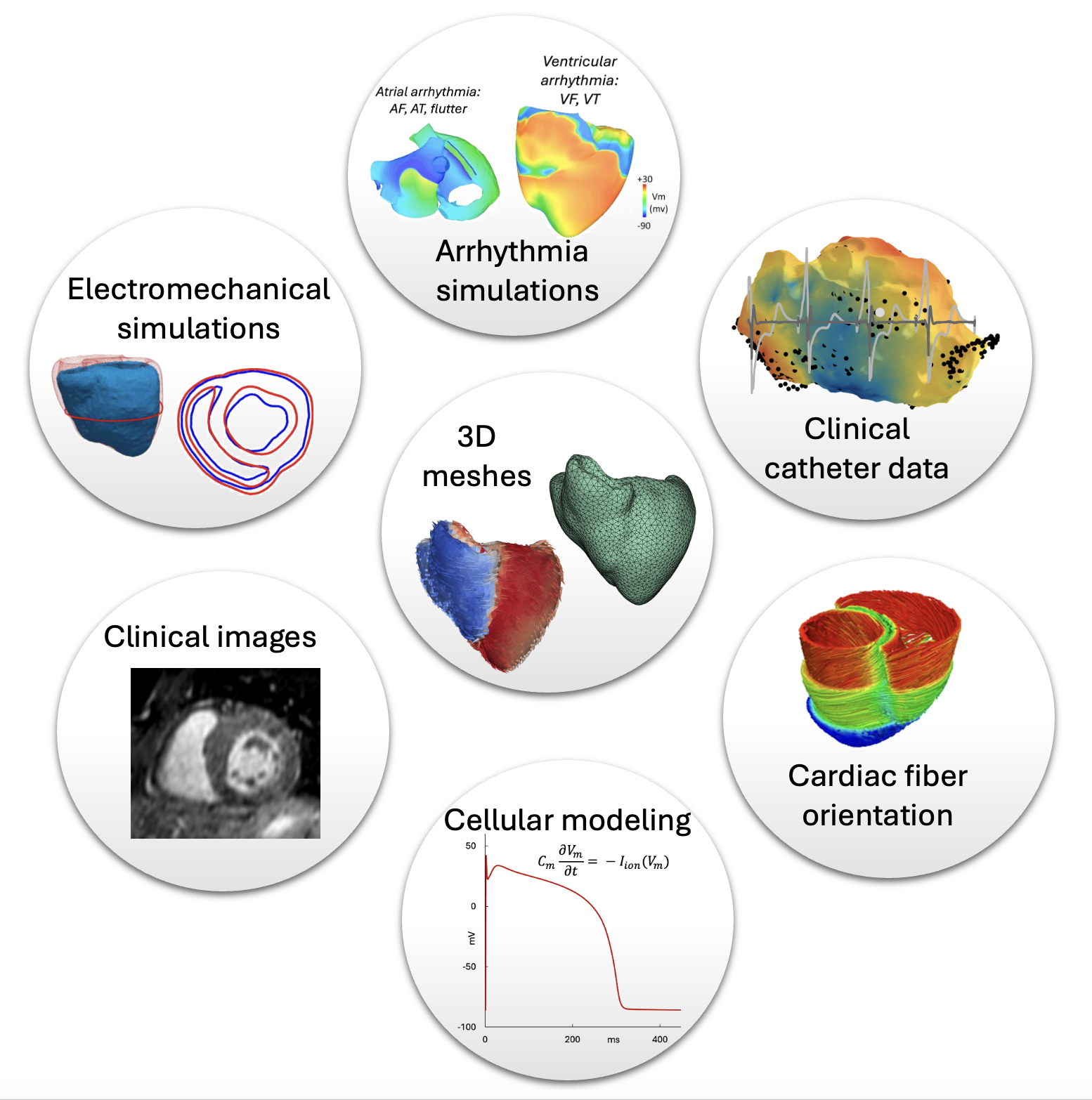
Our team is involved in several types of cardiac modeling including atrial and ventricular arrhythmia as well as electromechanical simulations reflecting the strain and stretch of the cardiac tissues as well as the fibre orientation. The simulations take into consideration mathematical models of transmembrane potentials of myocytes, the contracting cells of the heart innate with the ability to transfer electrical signals due to ion exchange. We incorporate different clinical data ranging from CT, MRI, gadolinium enhanced MRI and microCT to produce anatomically accurate meshes. In addition, catheter data providing endocardial electrical signal data are also used to enhance the meshes.
International Erasmus Exchange
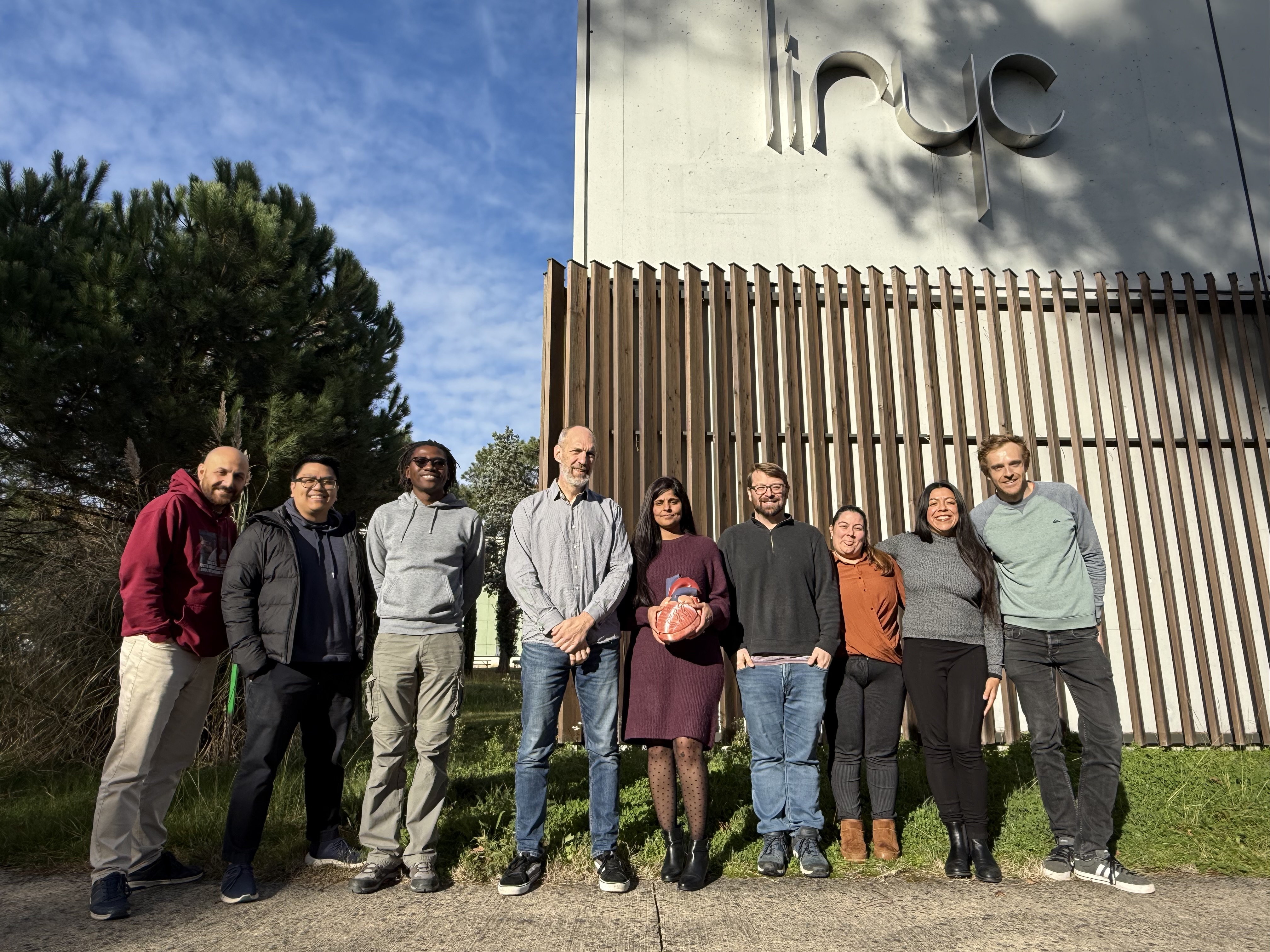
We were happy to host Minha Anees for her Erasmus stay in Bordeaux.
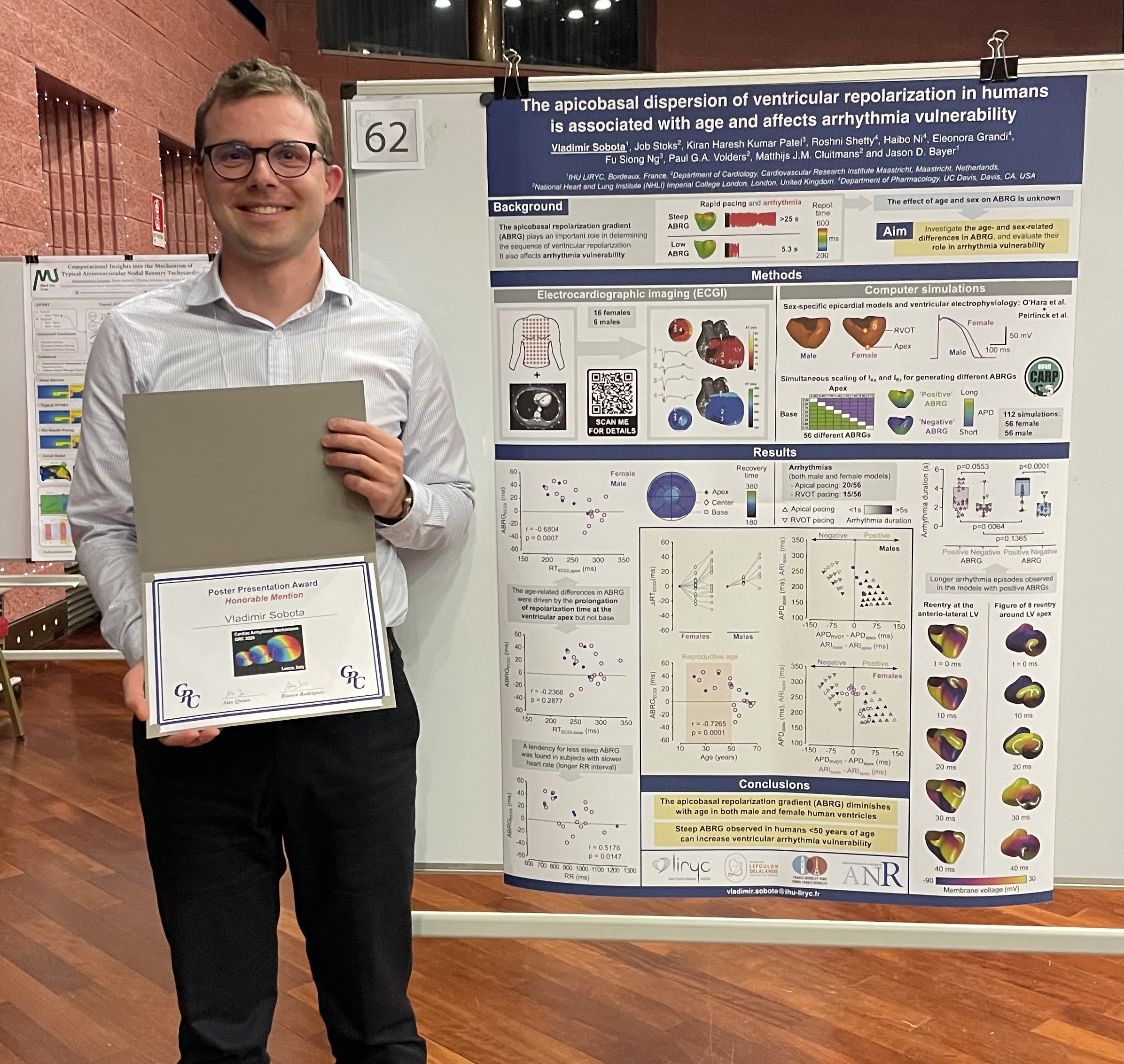
Honorable Mention Poster Presentation Award
Dr. Vladimir Sobota received the Honorable Mention Poster Presentation Award at the Gordon Research Conference (GRC) on Cardiac Arrhythmia Mechanisms held in Renaissance Tuscany Il Ciocco, Lucca, Italy, from February 23 to 28, 2025.
He has also been elected a chair for the 2027 Gordon Research Seminar (GRS) on Cardiac Arrhythmia Mechanisms, together with Roshni Shetty from the University of California, Davis.
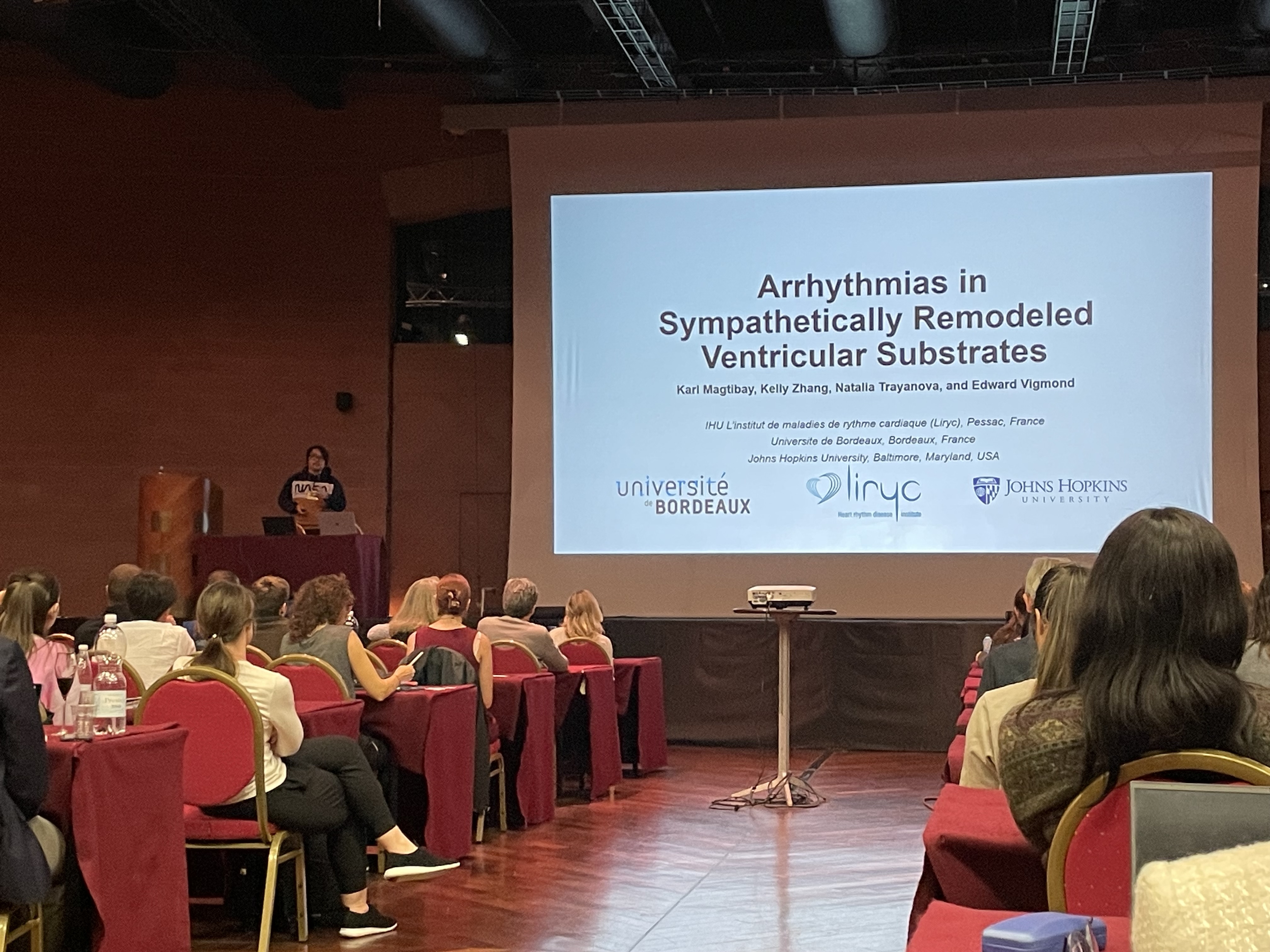
Gordon Research Conference Keynote Talk
Dr. Karl Magtibay giving his talk at the Gordon Research Conference (GRC) on Cardiac Arrhythmia Mechanisms held in Renaissance Tuscany Il Ciocco, Lucca, Italy, from February 23 to 28, 2025. His talk was one of the abstract-selected talks.
A His bundle pacing protocol for suppressing ventricular arrhythmia maintenance and improving defibrillation efficacy
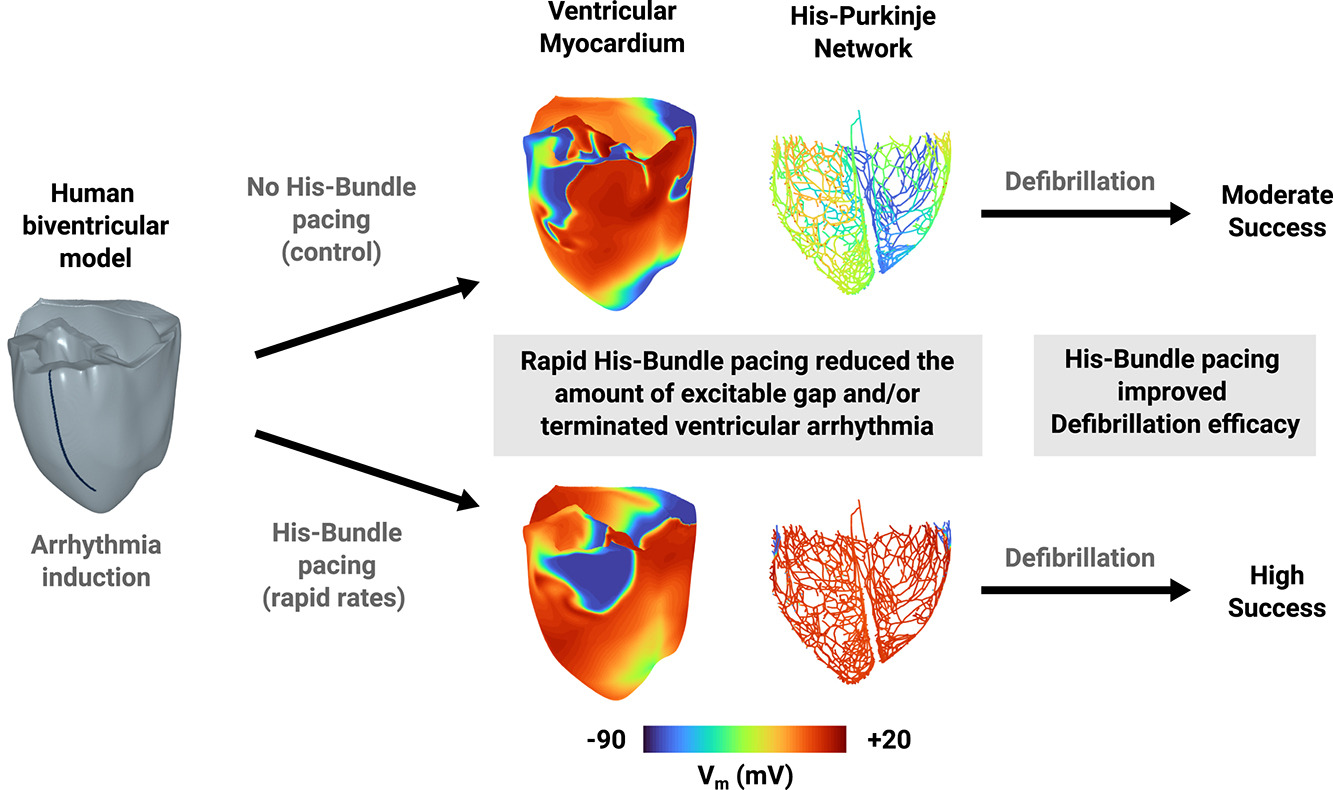
The excitable tissue between two subsequent depolarizations also known as the excitable gap (EG) in the His Purkinje Network (HPN) is critical for maintaining reentry underlying deadly ventricular arrhythmias. The aim of this work is to determine whether the rapid His bundle pacing (HBP) during reentry will reduce the amount of EG in the HPN and ventricular myocardium to suppress reentry maintenance and/or improve defibrillation efficacy...
Conclusion: HBP can reduce the amount of excitable gap and suppress reentry maintenance in the HPN and myocardium. HBP can also improve the efficacy of low-energy defibrillation approaches targeting excitable myocardium. HBP during reentrant arrhythmias is a promising anti-arrhythmic and defibrillation strategy.
The interplay of sex-specific electrophysiology and repolarization heterogeneity governs ventricular arrhythmia sustainability in women
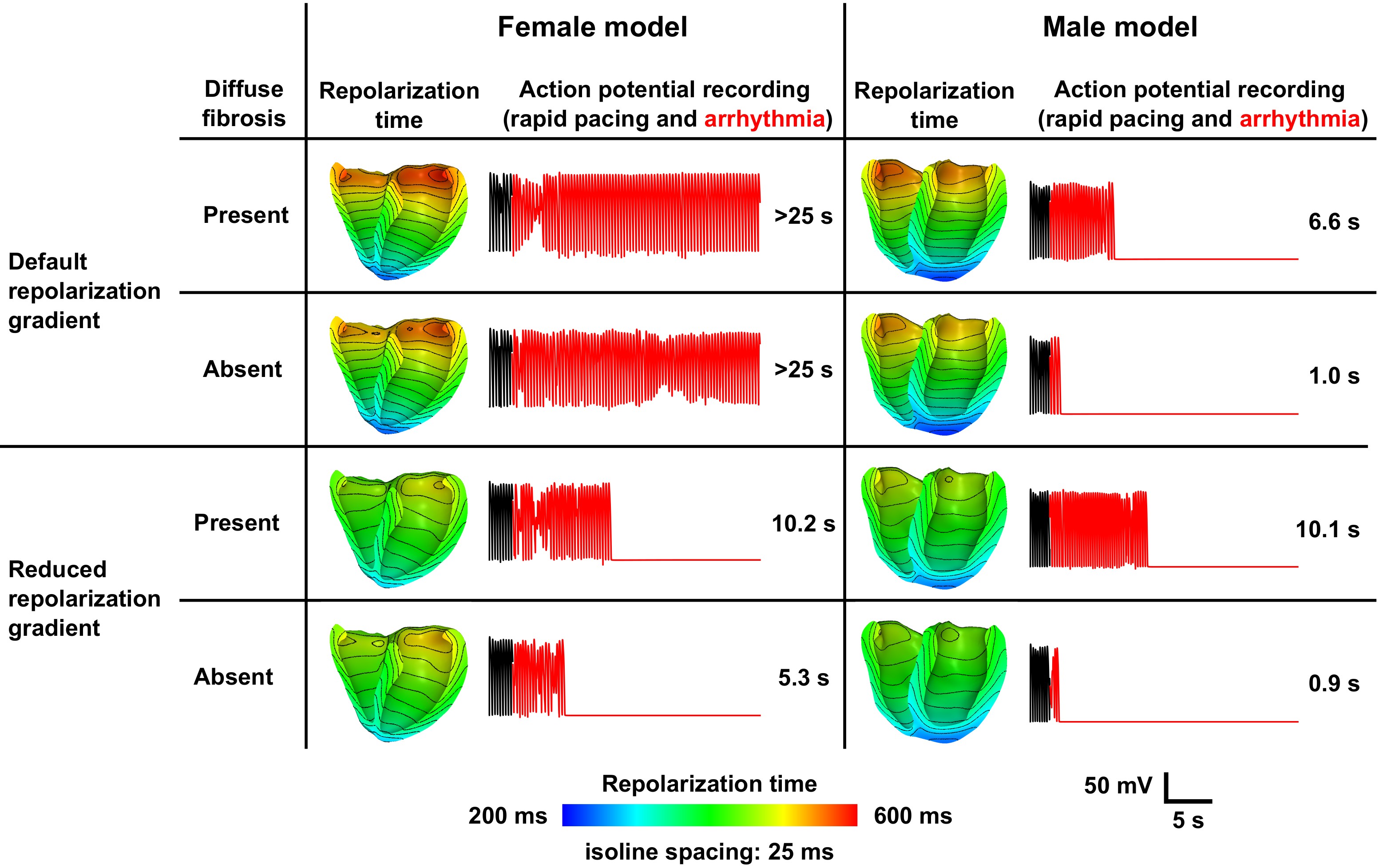
Our simulations have shown that there is a difference in electrophysiological response between genders. This study used magnetic resonance imaging (MRI) data to develop computational biventricular models of two aortic stenosis patients (a 54 years old male and a 64 years old female) before and 3 months after aortic valve replacement (AVR).
Conclusion: Longer APD and steeper apicobasal repolarization gradients in hypertrophic female ventricles resulted in sustained arrhythmia, despite their lower mass when compared to males. The absence of sustained reentry in the post-AVR models indicates a potential electrophysiological benefit of AVR and encourages future clinical studies to quantify sex-specific differences in spatial repolarization heterogeneity.
Meshes derived from MRI data of a male and a female subjects before and after aortic valve replacement

After AVR, ventricles have reduced ventricular mass. Mechanical structures and finite element discretization play a major role in precision medicine prediction.